

Heat pump buying guide for Canterbury: brands, sizing, installation
Canterbury winters bring crisp mornings and a wide range of microclimates from sheltered suburbs to exposed foothills. Choosing the right size heat pump is critical — a unit that’s too large can short cycle and waste energy, while one that’s too small will struggle to keep your home warm when temperatures drop. Getting the right match for your home makes all the difference to comfort, efficiency and performance.
This guide walks through brand considerations for local conditions, how to size correctly, what installations typically cost, and the features that actually improve comfort and efficiency. It also answers common questions about running costs, disadvantages to watch for, and how Wi Fi control helps you spend less while staying warm.
Modserve designs, installs and services heat pumps across Christchurch and wider Canterbury, with hands-on experience across Mitsubishi and Daikin ranges. The focus below is practical and location aware so you can make a confident choice ahead of the cooler months.
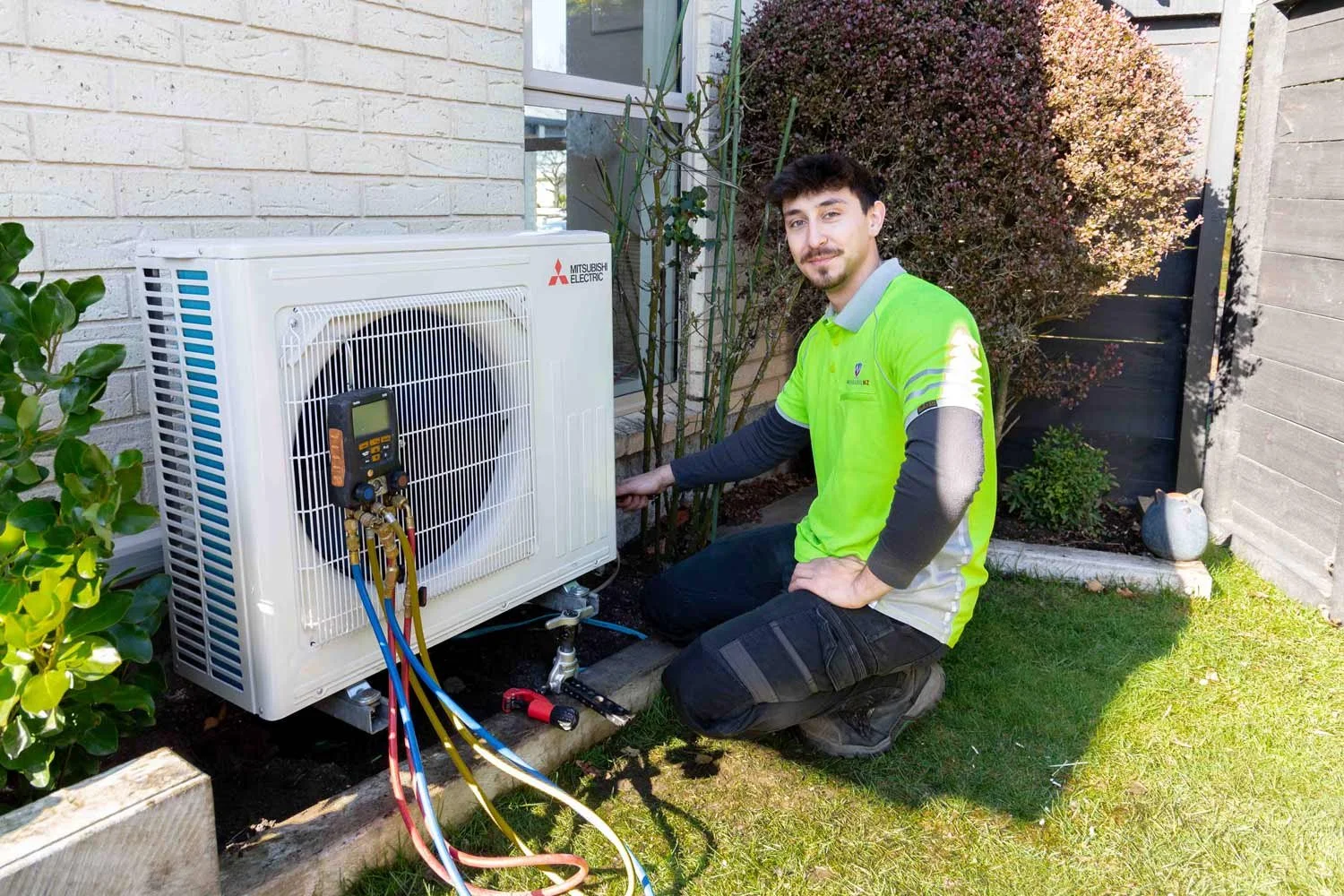
Modserve Technician installing a Mitsubishi Electric heat pump
What makes a good heat pump for Canterbury
A strong Canterbury performer is more than a high wall unit with a large number on the box. Consider:
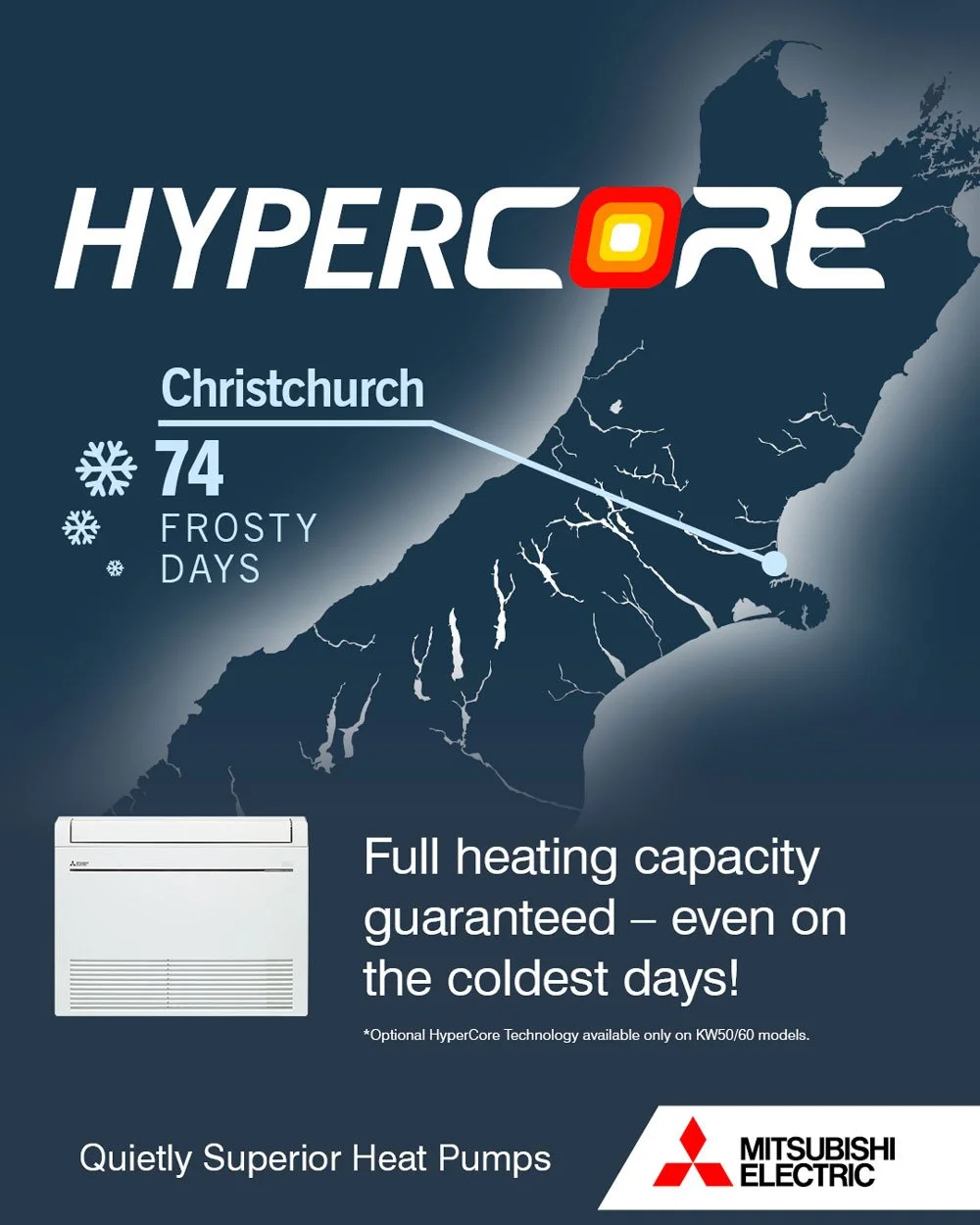
Low temperature output: Look for stable capacity down near freezing, with inverter technology that modulates without constant stop-start cycling. Hyper-heating or cold climate lines typically maintain better output in frosts and southerlies.
R32 refrigerant: R32 supports higher efficiency compared with older R410A systems and is now standard on many quality models.
Corrosion protection: Outdoor units near the coast or in exposed sites benefit from Blue Fin or equivalent anti-corrosion coatings, helping longevity in our salt laden air.
Airflow control and filtration: Multi-vane airflow, effective louvres, and multi stage or high grade filters improve comfort and indoor air quality when homes are closed up in winter.
Quiet and night modes: Quieter indoor and outdoor operation matters for bedrooms, densified suburbs, or tight side yards.
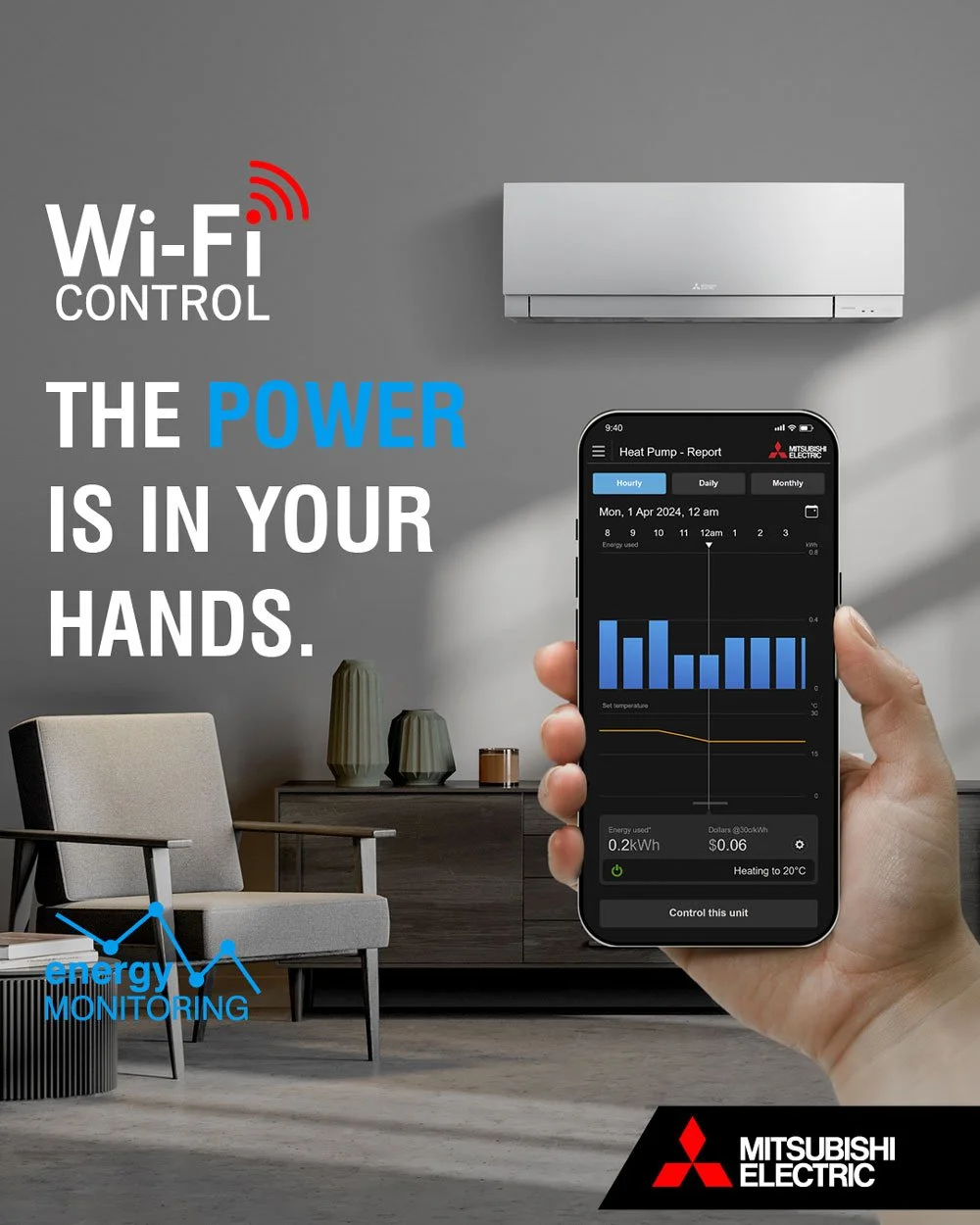
Wi Fi control: Remote scheduling and preheating help you run the system only when needed and arrive home to comfort without leaving it on all day.
Mitsubishi and Daikin both offer reliable ranges well suited to Canterbury when correctly selected and installed. Modserve commonly specifies Mitsubishi Electric for its cold-climate performance options, quiet operation, filtration, and robust controls, and also installs and supports Daikin models with similarly strong low ambient capability.
Sizing, insulation and layout
Correct capacity is the single biggest driver of comfort and running cost. A quick rule of thumb by floor area often misses critical details such as ceiling height, glazing, orientation, air leakage and how rooms connect.
Insulation first: Ceiling and underfloor insulation, plus effective curtains, reduce heat loss so a smaller, more efficient unit can keep up. Thermal imaging can identify missing or saturated insulation that undermines performance.
House layout: Open plan areas usually need higher capacity and smart airflow direction. Enclosed rooms may suit a smaller unit or a floor console to avoid draughts.
Location of the outdoor unit: Short, tidy pipe runs help efficiency and reduce installation complexity. When the outdoor unit cannot sit directly behind the indoor unit, costs and pressure drops can increase.
A professional on-site assessment accounts for all of the above, including whether a ducted solution suits a multi-room layout or if discrete high walls or a floor console are the better fit.
Features that meaningfully improve efficiency
Many brochure features sound similar. The following typically make a practical difference in Canterbury:
Inverter technology: Smooth output at part-load keeps temperatures stable and often uses less power than constant on-off cycling.
R32 refrigerant: Delivers strong efficiencies and supports compact designs with good heat exchange.
Blue Fin or similar: Extends outdoor coil life in coastal or exposed settings, reducing performance loss over time.
Advanced filtration: Helpful for allergy seasons and fine particulates. Cleaner coils and filters also protect efficiency.
Quiet/night modes: Enable lower outdoor fan speed during sleeping hours or council noise sensitivity periods.
Wi Fi control: Preheat or precool on schedule, confirm it is off when you leave, and avoid set and forget waste.
Modserve includes controller setup and Wi Fi handover with installations.
Installation cost guidance and what affects price
For a standard high wall split system, installation commonly ranges from about $775 to $1,500 (excl. GST) in Christchurch for straightforward sites, with final pricing confirmed after a free home assessment. Several factors can increase cost:
Long pipe runs or difficult access, for example when the outdoor unit cannot go behind the indoor unit
Ducted systems with multiple outlets, return air pathing, and ceiling works
Core drilling through thick or complex walls, and condensate pump requirements
Switchboard upgrades or additional electrical work where compliance requires it
Supply and installation are usually costed separately. A clear quote should explain what is included, what is provisional, and any site specific allowances so there are no surprises on the day.
If you are planning a new install or a replacement, you can learn more about the cost of heat pumps in our shop.
Running costs in New Zealand conditions
When sized and set up correctly, modern inverter heat pumps are among the most cost effective forms of electric heating in New Zealand. Actual running cost depends on:
Your set temperature and scheduling
The outdoor temperature and wind exposure
Insulation levels and air leakage
The unit’s seasonal efficiency rating and maintenance state
As a guide, keeping living areas around 19 to 21°C and bedrooms around 18°C typically balances comfort with economy. Avoid constantly using the highest fan speeds or extreme setpoints. Clean filters regularly, keep outdoor units clear, and book annual servicing to maintain efficiency.
See Modserve’s Christchurch heat pump service for routine maintenance and pricing, with travel charges outside Christchurch potentially applying. If you suspect a fault, timely diagnosis can prevent higher bills.
Commissioning, warranty and aftercare
Professional commissioning protects performance and warranty. For example, Mitsubishi Electric models typically carry a 5 year parts and labour warranty when installed by a certified Mitsubishi Electric heat pump installer. Correct evacuation, refrigerant charge verification, controller configuration, Wi Fi setup, and a documented handover are all part of best practice and help ensure quiet, efficient operation from day one.
Modserve handles ongoing servicing, filter guidance, and warranty support using genuine parts. For homeowners preferring Mitsubishi models, see the Mitsubishi heat pump Christchurch overview for model highlights suited to local climates.
The major disadvantage and how to mitigate it
The most cited disadvantage is performance drop in very cold or windy conditions, particularly in poorly insulated homes. As outdoor temperature falls, capacity reduces and defrost cycles become more frequent. Mitigation options include:
Choose a cold climate rated model with strong low ambient performance
Improve insulation and draught sealing to reduce load
Use sensible setpoints and avoid swinging temperatures that trigger frequent cycling
Consider a floor console in draughty rooms to deliver heat at occupant level
Pair with balanced ventilation to manage moisture and reduce condensation, which helps perceived warmth
How Wi Fi control and scheduling save energy
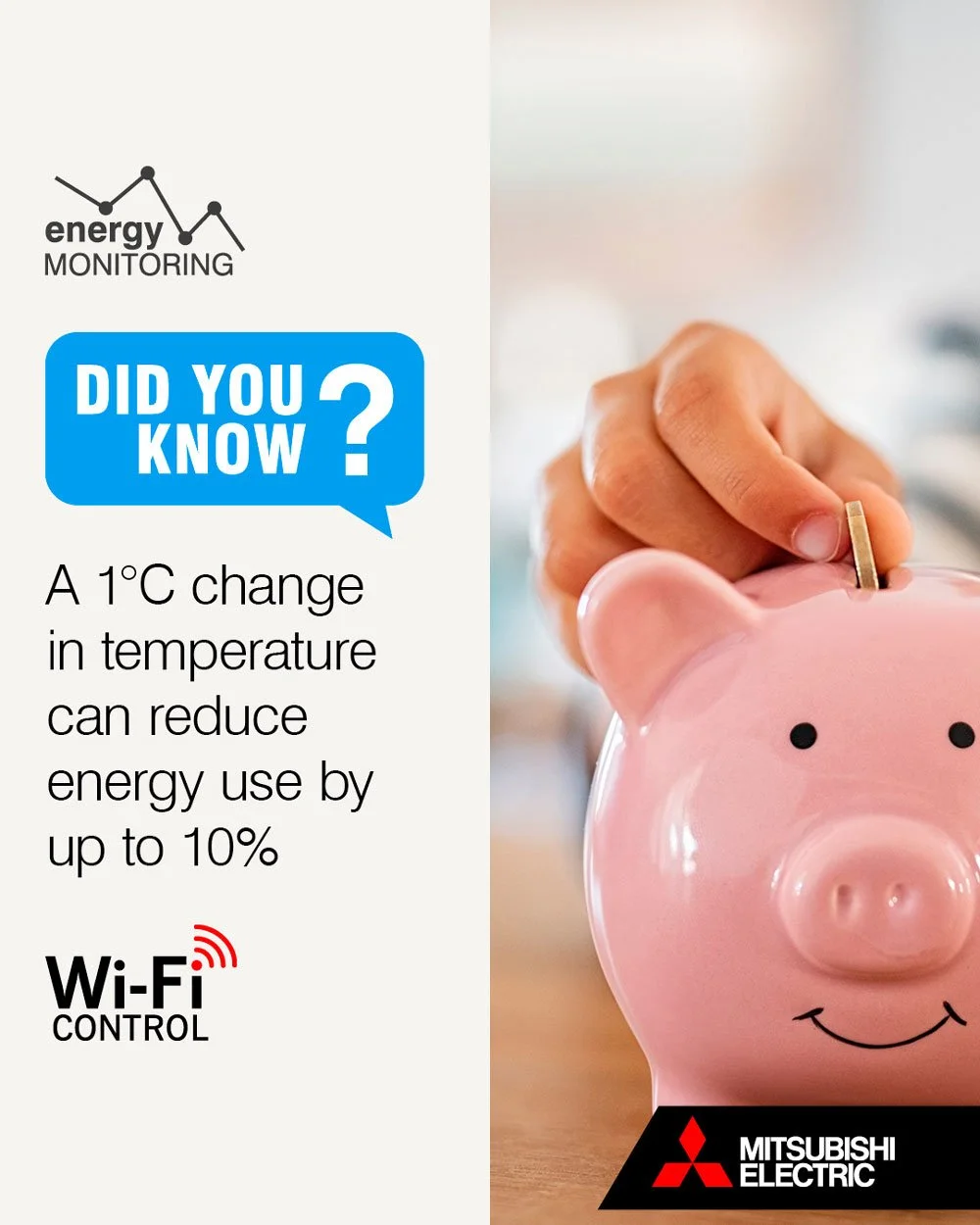
Wi Fi control lets you preheat before arrival, shift to a lower setpoint when the house is empty, and confirm the unit is off from your phone. Smart schedules avoid overnight overrun, and geofencing or simple timers keep operation matched to your routines. Many users find they can lower average setpoints by 1 to 2°C with better comfort when preheating, which often trims energy use without sacrificing warmth.
FAQ’s
-
Both Mitsubishi Electric and Daikin offer strong low-temperature performance options. The best choice is the model that matches your home’s size, insulation and layout, installed and commissioned correctly. Modserve frequently specifies Mitsubishi for quiet operation, cold-climate capability and controls, and also supports Daikin across a wide range of applications.
-
Typically no. Inverter heat pumps are often one of the most economical electric heating options when correctly sized and maintained, with costs varying based on setpoint, weather, insulation and usage.
-
Yes. Mitsubishi Omnicore systems provide a flexible multi-room solution so you can have a heat pump in each selected room while running only one outdoor unit, helping to keep outdoor spaces clear and installations tidy.